Ammonium sulfite: A Comprehensive Analysis of its Properties, Applications, and Industrial Uses
- Share
- Issue Time
- Aug 15,2026
Summary
Ammonium sulfite: A Comprehensive Analysis of its Properties, Applications, and Industrial Uses
Ammonium sulfite: A Comprehensive Analysis of its Properties, Applications, and Industrial Uses
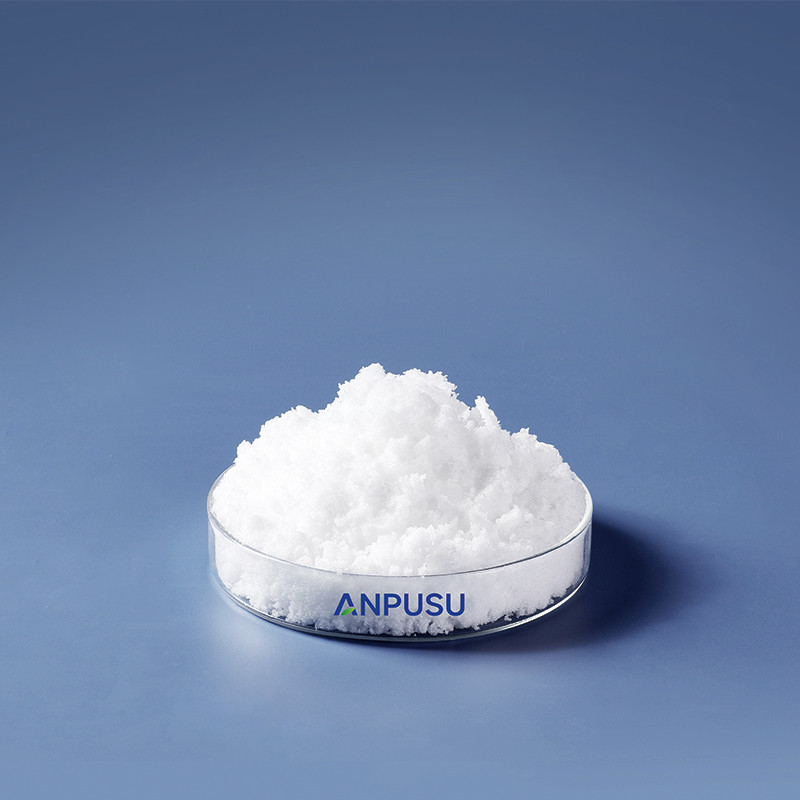
Ammonium sulfite is an important inorganic chemical raw material, with the chemical formula (NH₄)₂SO₃ and CAS number 10196-04-0. As a colorless crystalline powder, ammonium sulfite plays a significant role across various industries—such as papermaking, chemical manufacturing, water treatment, and agriculture—due to its excellent reducing properties and weak alkalinity. This article will provide a systematic overview of the physical and chemical properties of ammonium sulfite, its primary applications, and the current state of its industrial use.
I. Physical and chemical properties of ammonium sulfite
Ammonium sulfite appears as colorless monoclinic crystals or crystalline powder, with a relative density of approximately 1.41 (at 25 °C). Its main properties include:
· Solubility: readily soluble in water; the aqueous solution is weakly alkaline; slightly soluble in ethanol; insoluble in acetone and carbon disulfide.
· Stability:It readily oxidizes in air to ammonium sulfate; it decomposes upon heating to 60–70 °C.
· Hygroscopicity: This product is hygroscopic; it should be stored in a cool, dry place in a sealed container.
During storage and use, care should be taken to avoid contact with acids and oxidizing agents; store in a tightly sealed container in a cool, dry place.
II. Primary Applications of Ammonium Sulfite
Ammonium sulfite has a wide range of applications, primarily distributed across the following areas:
1. Papermaking Industry (Core Application)
The papermaking industry is the largest application field for ammonium sulfite, accounting for approximately 40% of its total usage. In the ammonium-based pulping process for paper production, ammonium sulfite serves as a pulping agent that can effectively remove lignin to produce sulfite pulp. Compared with traditional pulping processes, the ammonium-based pulping method offers advantages such as broad raw material adaptability and higher pulp yield.
2. Chemical and Pharmaceutical Industries
Ammonium sulfite is primarily used as a reducing agent in the chemical industry. Specific applications include:
· Used in the dyeing and printing industry for reduction dyes;
· Used as a photographic reducing agent in photosensitive material manufacturing, aiding the development process;
· Used as a reducing agent in the pharmaceutical industry for drug synthesis;
· A key raw material for synthetic insurance powder (disodium bisulfite);
· Used as a raw material for hair styling products such as hair sprays in the daily chemical industry.
3. Environmental Protection and Water Treatment
Ammonium sulfite can serve as an efficient absorbent for removing small amounts of hydrogen sulfide (H₂S) from coal gas. In wastewater treatment processes, ammonium sulfite can be utilized for deodorization to remove harmful gases such as hydrogen sulfide. Additionally, it can function as a reducing agent in water treatment applications.
4. Metalworking and Agriculture
In the metalworking industry, ammonium sulfite is used as a lubricant for cold metal processing. In agriculture, ammonium sulfite can be used as a nitrogen fertilizer (when combined with a stabilizer) or as a soil conditioner to neutralize acidic soils.
III. Production Process of Ammonium Sulfite
There are primarily two industrial processes for the production of ammonium sulfite:
Ammonia water method: Prepare an ammonia water solution with a specified specific gravity and alkalinity to absorb sulfur dioxide from sulfuric acid production tail gas or sulfur combustion flue gas in a circulating absorption process, thereby producing an ammonium bisulfate solution; once the absorption solution reaches the desired density, it is fed into a neutralization tank where ammonia water is added to carry out the neutralization reaction until the endpoint is reached; the resulting solution is then subjected to centrifugal separation and drying to obtain the final product.
Ammonium bicarbonate method: Sulfur dioxide in the sulfuric acid tail gas is absorbed using either the mother liquor or an ammonia water solution; the resulting ammonium bisulfite solution is then treated with ammonium bicarbonate to complete the neutralization reaction until the endpoint is reached; finally, the product is obtained through centrifugal separation and drying.
In recent years, resource-integrated utilization processes have garnered increasing attention within the industry. Some enterprises utilize waste ammonia and sulfur resources (such as sulfur sludge, sulfur paste, sulfur residue, and low-concentration ammonia water from industrial waste) to produce ammonium sulfite; by employing technologies such as impurity removal, high-efficiency combustion, three-stage absorption, demineralization, and exhaust gas scrubbing, these enterprises achieve both the resource recovery of waste materials and the production of high-quality industrial-grade products.
V. Safety and Storage Instructions
The following precautions should be observed when storing and using ammonium sulfite:
· Store in a cool, dry, and well-ventilated warehouse;
· Avoid storing in contact with acids or oxidizing agents;
· Keep dry to prevent the product from absorbing moisture and deteriorating;
· Susceptible to oxidation in air; therefore, the exposure time to air should be minimized as much as possible;
· In the event of a fire, water-based, dry powder, carbon dioxide, or foam extinguishing agents may be used.
epilogue
Ammonium sulfite, as a fundamental chemical raw material, plays an irreplaceable role across multiple sectors, including papermaking, chemical industry, environmental protection, and agriculture. With the further advancement of green manufacturing and resource recycling concepts, the ammonium sulfite industry is entering a new phase of high-quality development. Industry leaders such as Tiantai have been continuously enhancing product quality and environmental performance through technological innovation and process upgrades, injecting new vitality into the sustainable development of the ammonium sulfite industry. In the future, with the continuous expansion of application fields and the ongoing improvement of product quality, the market potential for ammonium sulfite is expected to expand further.